Appliance pickup vs dumpster rental depends on what you need removed and who will do the lifting. Pickup is usually best for one or several heavy appliances. A dumpster can work better for renovation debris or a long cleanout. The right choice also depends on access, safety, space, and disposal needs.
Table of Contents
- Is appliance pickup or dumpster rental better for heavy items?
- What is included with appliance pickup?
- When is a dumpster rental the better choice?
- How do appliance pickup and dumpster rental compare for heavy lifting?
- Which option is safer for removing large appliances?
- How are appliances disposed of or recycled?
- What affects the cost of appliance pickup versus dumpster rental?
- How do you choose between appliance pickup and a dumpster?
- What should homeowners know before scheduling appliance removal?
- Key takeaways for choosing the right heavy-item removal option
- Frequently Asked Questions
Is appliance pickup or dumpster rental better for heavy items?
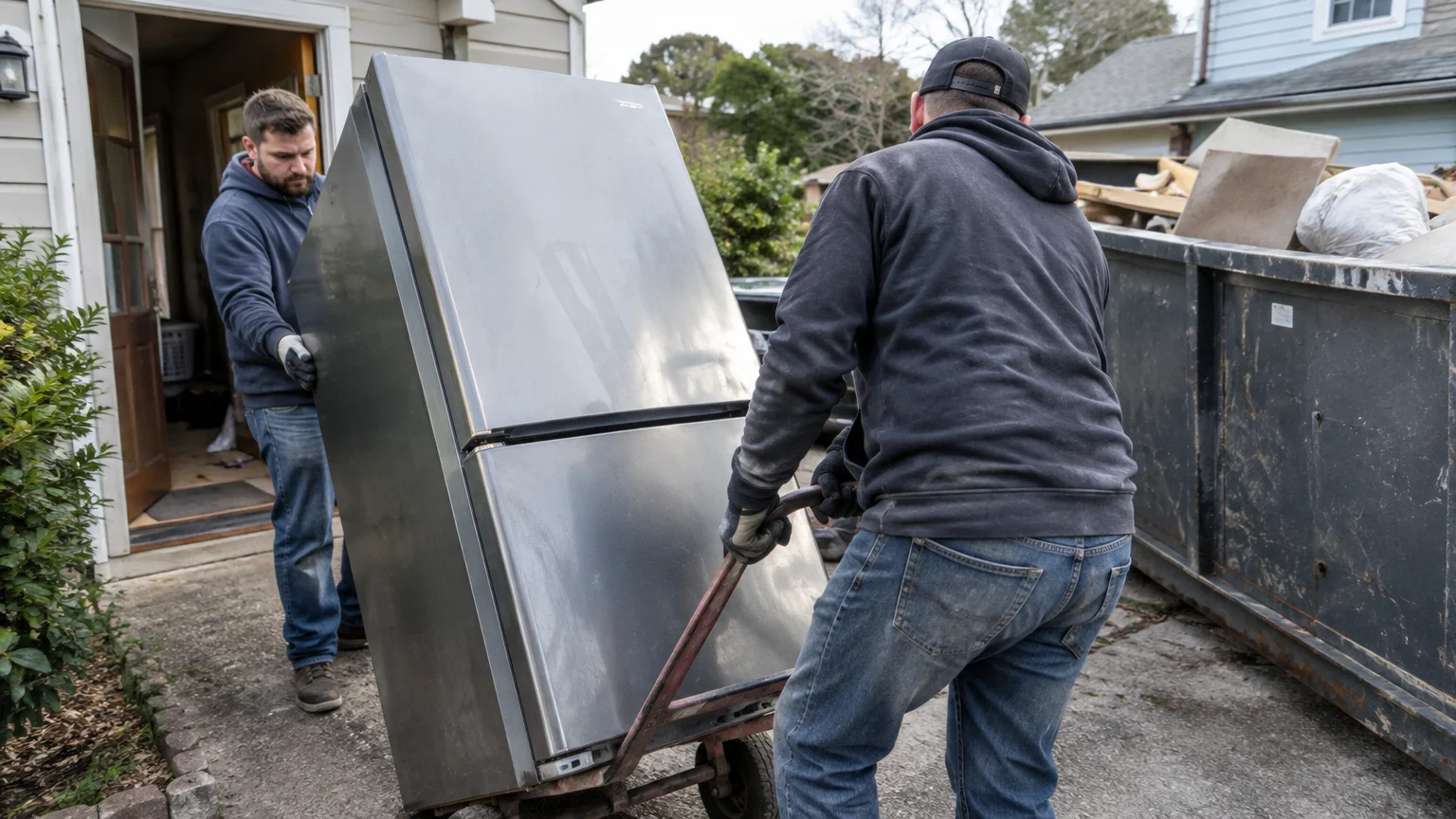
Appliance pickup is often the better choice for one large, heavy appliance. A crew can move the item, load it, and haul it away. This helps when the appliance is inside a house, basement, garage, or narrow side yard.
A dumpster can be useful when a property owner has many kinds of waste. It gives the project a place for approved debris. However, the homeowner or work crew must usually carry the items to the container.
How the two removal options work
Appliance pickup is a planned service. The homeowner lists the items and clears a path before the crew arrives. It also helps to mention stairs, narrow doors, gates, or other access limits.
The crew may move the appliance from its current spot. Workers may use blankets or other tools to protect nearby surfaces. After pickup, the items may go for reuse, recycling, transfer, or disposal based on their condition.
A dumpster is a container placed at the property for an agreed rental period. The homeowner fills it with accepted material. When the project ends, the container is collected. Prohibited items must stay out of the dumpster.
Which type of project each option suits best
Appliance pickup often fits refrigerators, freezers, washing machines, dryers, stoves, dishwashers, and air-conditioning units. It can also suit a small household cleanout with furniture and other bulky items.
A dumpster may fit a kitchen remodel, flooring job, roofing project, estate cleanout, or large garage clearing. The best choice depends on the amount of material and who will do the work.
Annapolis MD Junk Removal helps property owners compare these options before planning a collection. A clear list of the items and their location makes the discussion easier.
What is included with appliance pickup?
Appliance pickup usually includes collection, lifting, loading, and hauling. The exact service can vary by company and item. Homeowners should explain all needed work before scheduling.
Pickup may cover one appliance or several items from the same property. Some crews also collect furniture, boxed goods, and other safe household junk. The company can explain what belongs in the load and what needs another disposal method.
Common appliances that can be collected
Common items include refrigerators, freezers, washers, dryers, ovens, ranges, dishwashers, microwaves, and water heaters. Small appliances may also be accepted as part of a larger residential removal job.
Some appliances contain refrigerant, oil, batteries, or electronic parts. Refrigerant is a chemical that helps cooling equipment move heat. These materials may need special handling, so not every appliance belongs in a dumpster or trash bin.
Clean, working appliances may be sent for reuse. Broken units can contain steel, copper, aluminum, wire, glass, and other useful materials. Sorting starts with a clear description of the item and its condition.
What homeowners should prepare before pickup
Empty refrigerators, freezers, washers, and dryers before the crew arrives. Remove food, water, clothing, and loose parts. Secure doors and shelves when needed.
Clear the path from the appliance to the loading area. Rugs, boxes, toys, and small furniture can cause trips. Pets and children should stay away while heavy items are moved.
Homeowners should share these details in advance:
- The appliance type, size, and general condition
- The room or outdoor area where the item sits
- Stairs, narrow halls, gates, or steep driveways
- Whether the appliance connects to water, gas, or power
- Any damage that could make the move harder
Workers should not disconnect gas lines, electrical systems, or unsafe connections unless that work is part of their service. A qualified person should make these connections safe before pickup when needed.
When is a dumpster rental the better choice?
A dumpster may be better for a large amount of debris made over several days. It gives a remodel or cleanout one place for approved waste. This can reduce repeated trips when a homeowner, contractor, or cleanup team is already doing the labor.
A dumpster is less useful for one refrigerator or washer when the main need is heavy lifting. The homeowner still needs to move the appliance from the house to the container. That work can harm floors, walls, doors, or the appliance.
Renovation debris and large-volume cleanouts
Dumpsters often fit flooring, cabinets, drywall, wood, tile, roofing material, and other renovation debris. They may also work for a full garage cleanout or a property cleanout with many smaller items.
Place materials inside the container with care. Heavy debris should not be stacked in an unsafe way. Sharp pieces need careful handling, and banned materials must stay out.
Review accepted-material rules before delivery. Paint, chemicals, propane tanks, tires, some electronics, and refrigerant appliances may need another route. Local rules can also affect what a hauler accepts.
How long-term projects affect the decision
A longer project may favor a dumpster because debris can be added as work continues. This can help during a remodel that will not end in one day. The container must remain easy to reach during its rental period.
A short job with a few bulky items may favor scheduled appliance pickup. There is no need to keep a container on the property when the main task is removing finished appliances.
Available space matters too. Driveways, alleys, and streets may have placement limits. Homeowners should check property rules and ask about placement before choosing a container.
How do appliance pickup and dumpster rental compare for heavy lifting?
Appliance pickup usually provides more help with heavy lifting. The crew moves the item from its location and loads it onto a truck. Dumpster rental usually leaves moving and loading to the homeowner or project team.
This matters because appliances are both heavy and hard to grip. Their weight can shift during movement. Smooth sides can also make them difficult to hold safely.
Who handles moving, loading, and hauling
With appliance pickup, workers bring tools and work together. They may use dollies, straps, ramps, blankets, and other equipment. The crew also controls how the appliance enters the truck.
With a dumpster, the property owner places the debris inside. A contractor may do this during a remodel, but that depends on the work agreement. The dumpster company usually does not remove an appliance from inside the home simply because the container is nearby.
Homeowners should not ask friends or family to move a large appliance without a plan. A poor lift can cause injury. A rushed move can also damage a doorway or finished floor.
Access challenges around the home
Access can change the best option. Tight halls, basement stairs, raised thresholds, gates, and uneven ground may make self-loading hard. Tell the crew about these conditions before arrival.
Measure narrow openings when possible. An appliance may need its doors removed by a qualified person to fit through a tight space. Plan this work ahead of time rather than rushing it during the move.
Annapolis MD Junk Removal can ask Annapolis homeowners about access before arranging appliance removal. Clear details help the company bring the right crew and equipment.
Which option is safer for removing large appliances?
Professional appliance pickup is often safer when a large appliance must leave the home. The crew can plan the route, use moving tools, and control the load. A dumpster can still work safely for smaller debris when people follow safe work rules.
Safety depends on the appliance, its location, its condition, and the people doing the work. Rust, broken glass, leaking fluids, and loose parts can add risks.
Risks of moving refrigerators, washers, and dryers
Refrigerators and freezers can be hard to control on stairs. Washers may hold water that spills during movement. Dryers may have sharp edges, and older units may have damaged cords or panels.
Some appliances connect to gas, water, or high-voltage power. Do not disconnect an unsafe connection without the right knowledge. Make the power source safe before moving the item.
Keep hands away from pinch points. Keep the appliance upright when its design requires it. Never place a person under a lifted appliance or use makeshift supports.
Protecting floors, walls, doors, and driveways
Moving blankets and proper tools can help protect finished surfaces. Clear the route before the appliance starts moving. Open doors fully and move fragile decorations away.
Driveways can also suffer damage when heavy items are dragged. Use a dolly when suitable, and do not push the load across delicate surfaces. Watch for steps, cracks, wet ground, and loose gravel.
Homeowners can help by clearing clutter and keeping people away from the route. They do not need to lift the appliance when a professional pickup crew is handling the job.
How are appliances disposed of or recycled?
Appliances may be reused, recycled, taken apart for parts, or disposed of when recovery is not possible. The right path depends on the appliance type, working condition, and materials inside it.
Recycling means separating useful materials so they can be processed again. It is different from sending an appliance straight to a landfill. A responsible hauler sorts items when practical and follows handling rules.
Refrigerant, metal, and electronic components
Refrigerators, freezers, and some air-conditioning units can contain refrigerant. Homeowners should ask how this material will be recovered and handled.
Appliances also contain steel, copper, and aluminum. Motors, wires, circuit boards, insulation, glass, and plastic may need separate processing. This is one reason appliances should not be treated like ordinary trash.
Electronic controls and batteries may need a special recycling stream. Tell the service provider about unusual items, damaged batteries, or leaking units before collection.
Why responsible disposal matters
Proper disposal helps reduce unsafe handling and keeps useful materials in use. It also helps stop appliances from being left beside roads, in empty lots, or where children and animals can reach them.
Ask where collected appliances go and whether the company handles special materials. The answer may depend on local facilities and current acceptance rules.
For residents seeking local junk removal in the main Annapolis area, Eastport, West Annapolis, Severna Park, Edgewater, Arnold, Crownsville, and nearby communities may have different disposal rules. Annapolis MD Junk Removal can explain the planned handling process before the appointment.
What affects the cost of appliance pickup versus dumpster rental?
The final cost depends on the job, not only the appliance or container. Key factors include the amount of material, number of items, labor, access, travel, disposal needs, and timing. The final cost is confirmed on a quote after the work details are reviewed.
Appliance pickup and dumpster rental are built around different work. Pickup centers on labor and hauling. A dumpster centers on delivery, container space, the rental period, collection, and the material placed inside.
Volume, weight, labor, and access considerations
One appliance is usually a smaller job than a full home cleanout. Several appliances, heavy furniture, and dense debris can require more labor and truck space. Hard access can also change the work plan.
Basement stairs, long carries, narrow doors, and steep driveways may require more workers or special tools. Hazardous materials and refrigerant appliances may need another process. Share these details when requesting a quote.
A dumpster may be less suitable when it must remain for a long time but only a small amount of waste will be added. It can also be a poor fit when the main problem is lifting items from inside the home.
When the final quote is confirmed
The final cost should be confirmed after the company understands the items, access, labor needs, and disposal requirements. Ask what the quote includes and whether special materials need approval.
Do not rely on a guess based only on an appliance photo or a general service name. Clear information helps prevent confusion and supports a safer plan.
How do you choose between appliance pickup and a dumpster?
The choice comes down to four questions: what needs removal, who will do the lifting, how fast the property must be clear, and whether special materials are present. Appliance pickup usually fits bulky items. A dumpster usually fits ongoing debris work.
Think about space, access, and the amount of hands-on help available. A low container does not remove the need to carry heavy items from the house.
A practical decision checklist
Use this checklist when comparing the options:
- Choose appliance pickup for one or several large appliances.
- Choose appliance pickup when workers must carry items from inside.
- Choose a dumpster when renovation debris will build up over several days.
- Choose a dumpster when a project team can load it safely.
- Ask about refrigerant, batteries, chemicals, and electronics.
- Confirm placement space, access limits, and accepted materials.
Choose the method that matches the work, not only the container size. The safer choice may be the one that removes the most lifting from the homeowner.
Combining removal methods for larger projects
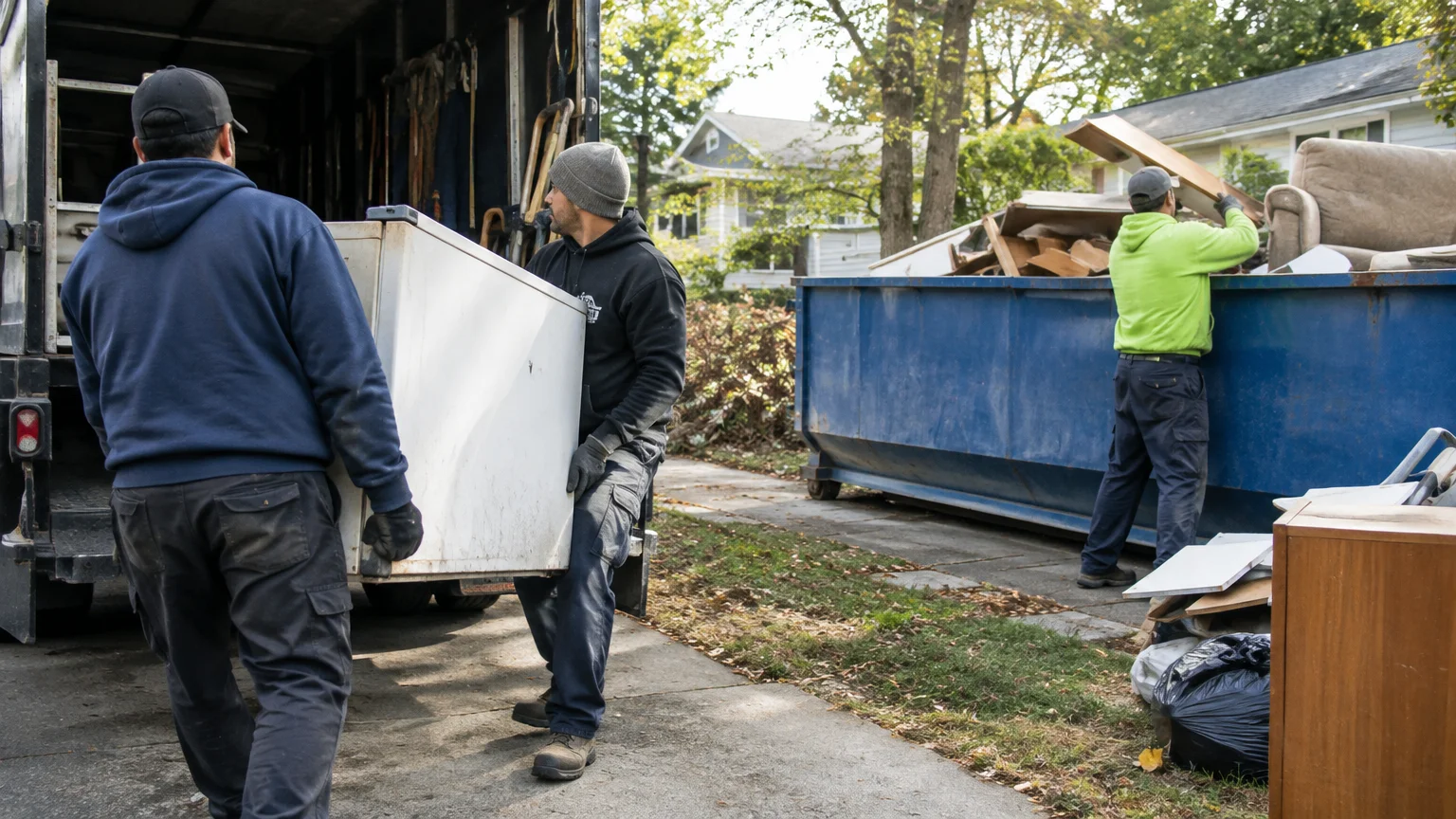
Some projects use both options. A dumpster can hold clean renovation debris while appliance pickup handles refrigerators, washers, dryers, and other bulky units. This keeps special items apart from general construction waste.
A combined plan works best when each provider knows what the other service will handle. Do not place restricted appliances or materials in a dumpster without approval.
What should homeowners know before scheduling appliance removal?
Before scheduling, list every item and explain where it sits. Mention stairs, narrow paths, gates, slopes, and damage. Also say whether an appliance connects to power, gas, or water.
A clear list helps the company decide whether the job fits a standard pickup. It also helps the homeowner prepare the property and avoid delays.
Preparing appliances for collection
The appliance should be empty, dry when possible, and easy to reach. Clear food from refrigerators and freezers. A washer should not hold water or clothing, and a dryer should be empty.
Remove loose shelves, racks, trays, and personal items. Do not cut lines or disconnect unsafe systems unless you know how to do so safely. A qualified worker should handle gas and electrical concerns.
Clear the path from the appliance to the loading area. Children and pets should stay away while the crew works. Outdoor areas should be free of branches, tools, and standing water.
Questions about prohibited or special items
Ask which appliances and materials the company accepts. Questions matter most for items with refrigerant, fuel, chemicals, batteries, medical waste, or sharp damage.
The company may decline an item or suggest another facility. This does not mean the item cannot be handled. It means the item needs a disposal route that fits its material and risk.
You can also ask how reusable items are sorted and whether recyclable metals are separated. These questions help match the service to both the cleanup and disposal needs.
Key takeaways for choosing the right heavy-item removal option
- Appliance pickup usually fits one or several large household appliances.
- A dumpster usually fits renovation debris and ongoing cleanouts.
- Pickup includes more help with lifting, loading, and hauling from the home.
- Report stairs, tight spaces, connections, damage, and special materials.
- The final cost depends on job details and is confirmed on a quote.
The best choice for a single appliance or small cleanout
Appliance pickup is often the simpler choice for a refrigerator, freezer, washer, dryer, stove, or similar item. It reduces the need to move heavy equipment across the property. It can also keep special appliances apart from regular household debris.
A small cleanout may fit pickup too, especially when it includes furniture or bulky items. Describe the full load so the company can plan the visit.
The best choice for ongoing renovation debris
A dumpster often fits a remodel, demolition project, or long garage cleanout. It gives the project a place for approved debris as work continues. The property owner must still load it safely and follow accepted-material rules.
The best result comes from matching the service to the work. Annapolis MD Junk Removal helps property owners review items, access, and disposal needs before choosing. Contact us to arrange appliance pickup and discuss the right removal plan.
Frequently Asked Questions
Is appliance pickup better than a dumpster for one refrigerator?
Usually, yes. Appliance pickup is made for bulky items that need lifting and hauling. A dumpster may require the homeowner to move the refrigerator from inside and load it alone. Ask about refrigerant handling before scheduling removal.
Can a washing machine go in a dumpster?
It depends on the dumpster company and local rules. Some providers do not accept appliances, while others may allow certain units with approval. Never place a washer in a container without checking first.
Who takes old freezers?
A junk removal company, appliance recycler, transfer facility, or local waste program may accept an old freezer. Freezers can contain refrigerant and should not be treated like ordinary trash. Describe the unit and ask how it will be handled before collection.
Can homeowners move large appliances themselves?
They can handle simple preparation, such as emptying the appliance and clearing the path. Moving the appliance is different. Large units can cause injury or property damage, especially on stairs or tight turns. Professional pickup is safer when special tools or several people are needed.
What should homeowners do with appliances that still work?
Working appliances may suit reuse, donation, resale, or a reuse program. Check the item’s condition, age, safety, and local rules. A removal company may help direct usable items toward reuse instead of general waste.
If you are not sure what you are dealing with, it is worth having someone look at it before it turns into a bigger job. Get in touch with Annapolis MD Junk Removal today and we will tell you where you stand.